In 2026, CEOs are no longer asking for manual reports; they are asking for clarity. Leadership today does not want spreadsheets filled with disconnected metrics. Instead, they prefer a unified view of how the business is performing, where revenue is coming from, and what risks are emerging before they become problems. This is where HubSpot Reporting Dashboards have become essential.
Many businesses still think that HubSpot reports are just for teams, but that’s not true. CEOs can also keep track of everything that’s happening in their company directly from HubSpot.
In this blog, you’ll explore 6 HubSpot Reporting Dashboards for CEOs. These will help them not just get generic views, but align directly with revenue, growth, and operational control.
Why CEOs Need a Different Approach to Reporting
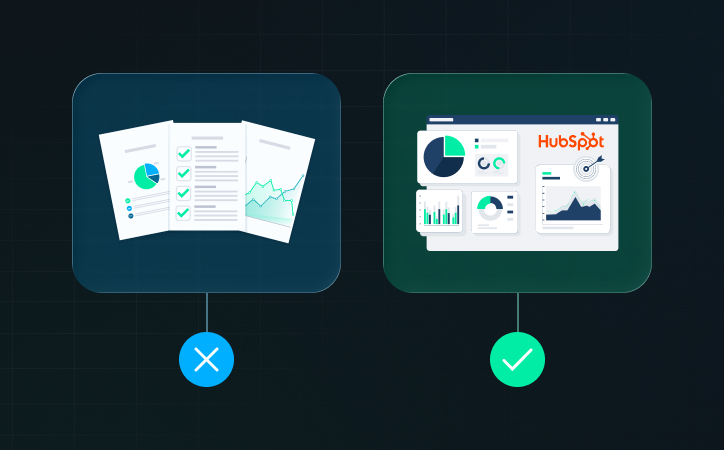
Most dashboards fail at the executive level because they answer the wrong questions.
Marketing dashboards typically highlight traffic, clicks, and campaign performance. Sales dashboards focus on pipeline stages and quotas. Operations dashboards track process efficiency.
Each of these is useful. But none of them provides a CEO with a complete picture.
A CEO is responsible for outcomes, not activities. They need to understand how different parts of the business connect. More importantly, they need to see how decisions today will impact revenue tomorrow.
This is why HubSpot Reporting Dashboards for leaders must be structured differently.
They should answer questions like:
- Where is revenue growth coming from this quarter?
- Which segments are driving the highest profitability?
- Are deals moving faster or slowing down?
- Where are we losing opportunities in the funnel?
- What risks are building across the pipeline?
A well-designed dashboard does not just report the past. It signals the future.
If you are still early in structuring your CRM and reporting setup, working with experts through structured HubSpot onboarding can ensure that your dashboards are aligned with business outcomes from the beginning.
1: The Revenue Intelligence Dashboard
At the core of every executive reporting system is revenue visibility.
The Revenue Intelligence Dashboard is the foundation of all HubSpot Reporting Dashboards. It brings together data from marketing, sales, and customer success to show a unified revenue view.
Instead of looking at isolated metrics, this dashboard connects the entire lifecycle. It shows how leads turn into opportunities and how those opportunities convert into closed revenue.
A CEO should be able to open this dashboard and immediately understand:
- Total revenue generated in a given period
- Revenue by source, channel, or campaign
- Contribution of marketing versus sales-led efforts
- Trends in deal size and deal velocity
- Forecast versus actual performance
What makes this dashboard powerful is not the numbers alone. It is the relationships between them.
For example, if revenue is growing but deal velocity is slowing, it signals future risk. If marketing contribution is declining while sales effort increases, it indicates inefficiency.
For a deeper understanding of how specific metrics contribute to revenue, this guide on 7 HubSpot Metrics You Must Track to Prove Revenue Impact in 2026 provides additional context on aligning reporting with financial outcomes.
2: The Marketing to Revenue Attribution Dashboard
One of the most debated topics in any organization is marketing’s contribution to revenue.
Traditional reporting often creates friction between teams. Marketing reports lead volume. Sales reports closed deals. The connection between the two remains unclear.
This is where attribution becomes critical.
The Marketing to Revenue Attribution Dashboard connects campaigns, channels, and touchpoints directly to revenue outcomes. It provides clarity on what is actually working.
For CEOs, this dashboard answers:
- Which channels generate the highest revenue, not just leads
- How long does it take for leads to convert into customers
- Which campaigns influence high-value deals
- The cost efficiency of each acquisition channel
When implemented correctly, this dashboard changes how budgets are allocated.
Instead of relying on assumptions, leadership can invest in channels that consistently drive revenue. It also helps eliminate underperforming campaigns that consume resources without delivering results.
For businesses looking to build this level of clarity, exploring Buldok Marketing services can help align attribution models with real business outcomes.
3: The Pipeline Health Dashboard
Revenue is an outcome. Pipeline is the predictor.
The Pipeline Health Dashboard gives CEOs early visibility into what is likely to happen in the coming months. It focuses on deal flow, conversion rates, and bottlenecks.
This is one of the most critical HubSpot Reporting Dashboards for CEO because it shifts the conversation from reactive to proactive.
Instead of asking why revenue dropped, the CEO can identify warning signs before the drop occurs.
Key insights from this dashboard include:
- Number of deals in each pipeline stage
- Conversion rates between stages
- Average time spent in each stage
- Pipeline coverage relative to targets
- Stalled or aging deals
A healthy pipeline is not just about volume. It is about movement.
If deals are entering the pipeline but not progressing, revenue risk increases. If conversion rates drop at a specific stage, it points to a structural issue in the sales process.
This dashboard allows leadership to intervene early. It also helps align sales and marketing around shared accountability.
4: The Sales Performance and Forecasting Dashboard
Forecasting is one of the most important responsibilities of a CEO. Yet it is often based on incomplete or delayed data.
The Sales Performance Dashboard transforms forecasting into a data-driven process.
This dashboard combines historical performance with current pipeline data to create realistic projections. It also highlights whether the team is on track to meet targets.
Key areas covered include:
- Individual and team sales performance
- Win rates across different segments
- Forecasted revenue based on pipeline data
- Quota attainment trends
- Performance gaps across regions or teams
What makes this dashboard valuable is its ability to highlight patterns.
For example, if win rates are strong but pipeline volume is low, the issue lies in lead generation. If pipeline volume is high but win rates are declining, the issue lies in sales execution.
This clarity allows CEOs to make targeted decisions rather than broad changes.
5: The Customer Retention and Expansion Dashboard
Growth is not only about acquiring new customers. It is also about retaining and expanding existing ones.
Many organizations focus heavily on acquisition metrics while ignoring post-sale performance. This creates hidden revenue risk.
The Customer Retention Dashboard ensures that CEOs have visibility into long-term value.
It focuses on:
- Customer retention rates
- Churn trends and patterns
- Expansion revenue from existing customers
- Customer lifetime value
- Engagement and usage indicators
Retention is often more profitable than acquisition. Yet it receives less attention in reporting.
By including this dashboard in your HubSpot Reporting Dashboards for leaders, you create a balanced view of growth.
It also helps identify early warning signs. A decline in engagement or an increase in churn in a specific segment can indicate product or service issues that need immediate attention.
6: The Operational Efficiency Dashboard
As companies scale, operational complexity increases.
Processes that worked at a smaller scale often become inefficient. Manual workflows slow down execution. Teams spend more time managing systems than driving outcomes.
The Operational Efficiency Dashboard provides visibility into how effectively the business is running.
It includes insights such as:
- Lead response times
- Sales cycle length
- Task completion rates
- Workflow automation performance
- Bottlenecks in internal processes
This dashboard is particularly important for CEOs focused on scalability.
It highlights areas where automation can improve efficiency. It also shows where delays are impacting revenue.
For example, slow lead response times can reduce conversion rates. Longer sales cycles can impact cash flow.
By monitoring these metrics, leadership can optimize operations without disrupting growth.
How to Structure HubSpot Reporting Dashboards for Maximum Impact
Having the right dashboards is only part of the equation. How they are structured matters just as much.
Many organizations fail because they overload dashboards with too much information. This creates confusion rather than clarity.
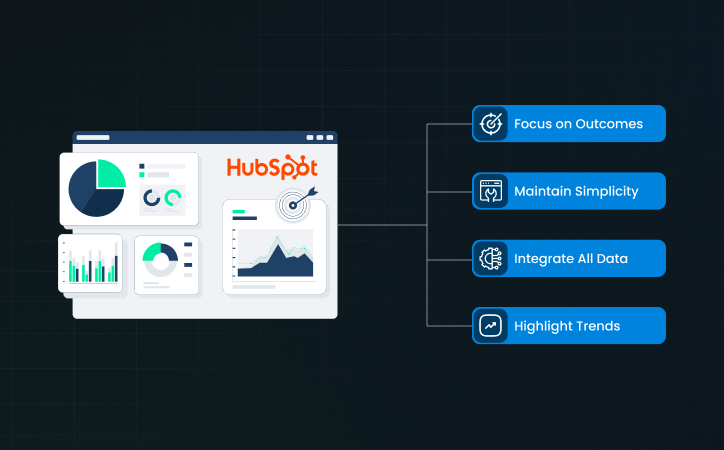
Effective HubSpot Reporting Dashboards follow a few key principles.
- First, they prioritize outcomes over activity. Every metric should connect to revenue, growth, or risk.
- Second, they maintain simplicity. A CEO should be able to understand the dashboard within minutes.
- Third, they integrate data across teams. Marketing, sales, and operations should not exist in silos.
- Fourth, they focus on trends rather than snapshots. Direction matters more than isolated numbers.
If your current dashboards do not meet these criteria, it may be time to revisit your CRM structure. Starting with a strong foundation through HubSpot onboarding ensures that reporting is built correctly from the ground up.
Common Mistakes CEOs Should Avoid
Even with the right tools, many organizations struggle to extract value from their dashboards.
One common mistake is relying on default reports. While platforms like HubSpot provide powerful capabilities, out-of-the-box dashboards rarely align with specific business models.
Another mistake is focusing on vanity metrics. High traffic or lead volume may look impressive, but they do not guarantee revenue.
Lack of alignment between teams is also a major issue. If marketing, sales, and operations define success differently, dashboards will reflect that misalignment.
Finally, many dashboards are static. They show what happened but fail to provide insights into what should happen next.
Avoiding these mistakes requires a strategic approach. It also requires continuous refinement as the business evolves.
Turning Dashboards Into a Strategic Advantage
When implemented correctly, dashboards become more than reporting tools; they become a strategic advantage.
CEOs can identify growth opportunities faster. They can detect risks earlier. They can align teams around shared goals. Most importantly, they can make decisions with confidence.
This is the real value of HubSpot Reporting Dashboards for CEOs. They transform data into direction.
For organizations looking to build or optimize their reporting systems, exploring capabilities like HubSpot Reporting Dashboards can provide a starting point for understanding what is possible.
Final Thoughts
The role of reporting has changed. It is no longer about tracking performance. It is about guiding decisions.
CEOs who rely on fragmented data will struggle to keep up with modern business demands. Those who invest in structured, outcome-focused dashboards will gain a significant advantage.
The key is not to build more dashboards. It is to build the right ones.
When your HubSpot Reporting Dashboards align with revenue, pipeline, and operational efficiency, they become a central part of your growth strategy.