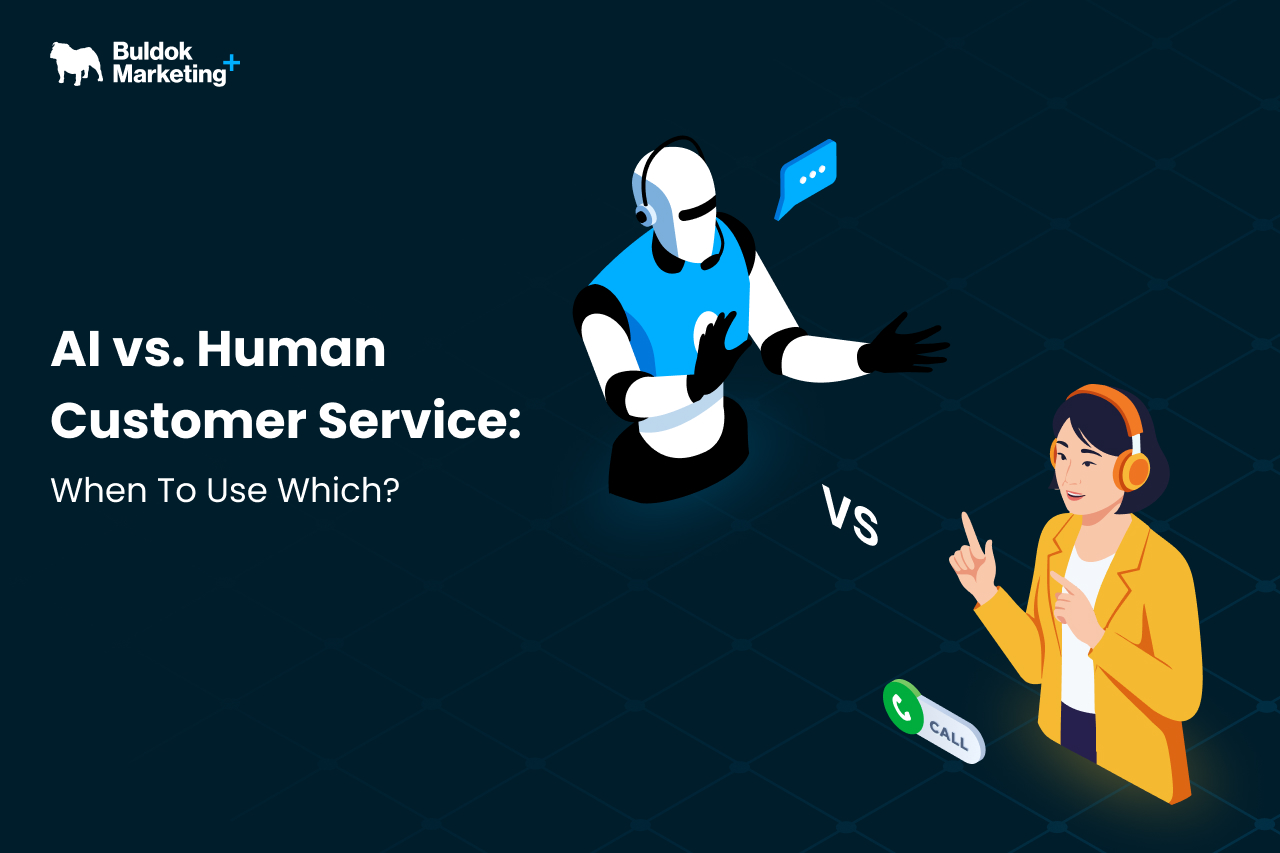
AI is great at speed, humans are great at empathy, and customers want both.
For years, businesses have asked the wrong question: “Should we use AI or hire humans for customer support?”
But today’s customers don’t think in those terms. All they care about is fast and empathetic answers, and a smooth experience from start to finish.
But this raises a new question for leaders: “When to choose AI and when to choose humans for customer support?”
Its answer lies in this blog. Dive deep to understand the pros and cons of each alternative and when one outperforms the other.
Use of AI In Customer Service
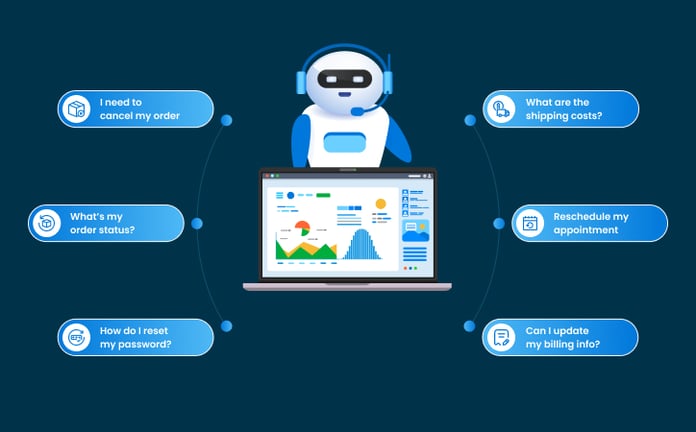
The primary use case of AI in customer service is training it for managing repetitive tasks that humans shouldn’t be wasting time on. Here’s where AI shines:
1. In Constant Replying Mode, 24/7Customers hate waiting for small support tasks. AI can handle such queries and respond immediately to handle high-volume queries. Plus, it works 24/7, that’s something even the best human team can’t match.
2. Perfect for Managing Repetitive QuestionsAI manages repetitive questions like order status, pricing, shipping, appointment scheduling, and password resets, and clears the clutter so your team can focus on real conversations.
3. Consistent Responses as per Brand ToneAI never has a day off. It pulls answers from your knowledge base, follows predefined rules, and avoids the small mistakes that sometimes happen with manual replies.
4. Scalable Even In Tight BudgetsSeasonal spikes, sudden demand, product launches, AI absorbs the load without you needing to double your headcount.
5. Fast With Data FetchupAI can quickly pull account details, track orders, fetch documentation, or review past interactions.
6. Provides for Proactive SupportAI can send reminders, alert users about delays, auto-suggest helpful articles, and guide customers before they hit a problem.
Where Human Support Still Wins

AI responds quickly, but humans outperform in situations where emotion, nuance, and gut feeling matter. Customers may accept AI for quick tasks, but during a complicated or sensitive situation, they want a real person to talk to.
Here’s where human support is irreplaceable:
1. Situation Demands Emotional Intelligence & EmpathyWhen a customer is confused, frustrated, or anxious, a scripted or automated reply isn’t enough. In such situations, humans can read tone, adjust their approach, and reassure customers in an empathetic way.
2. While Solving Complex QueriesSome problems need accurate real-time discussion and decision-making. For example: technical troubleshooting, billing disputes, etc. These require a human interpretation and guide the customer with accurate information.
3. Revenue Related ConversationsCustomers buy from people, not bots. Hence, conversations related to upsells, renewals, consultations, and high-ticket purchases rely on trust only!
4. Situations With Business RiskRefunds, legal concerns, compliance questions, or anything that can escalate should never be automated blindly.
5. Where Human Touch is a MustIn industries like finance, healthcare, coaching, beauty, and hospitality, the personal touch is part of the experience.
AI vs. Human Customer Support: How to Decide Which One Fits The Scene?
The best customer service teams don’t guess when to use AI or humans—they use clear logic. Here’s an easy framework to help you decide which one should handle each type of conversation.
| Use AI When… | Use Human Support When… |
| The question is repetitive (order status, pricing, FAQs) | The customer is frustrated, confused, or emotional |
| The answer already exists in your knowledge base | The issue requires judgment or multi-step troubleshooting |
| Speed matters more than emotion | There’s a dispute, mistake, or escalation involved |
| The task is transactional (booking, cancellations, lookups) | The conversation impacts revenue (renewals, cancellations, upsells) |
| You’re handling large volumes or peak traffic | Compliance, legal, or financial risk is involved |
| Customers are browsing or seeking quick, simple guidance | Trust-building matters (high-ticket items, sensitive industries) |
| You need 24/7 coverage without increasing cost | The customer needs reassurance, clarity, or a human touch |
The Hybrid Approach: Best Results Come From Combining Both
Smart companies don’t choose between AI and humans; they design a support system where each one plays to its strengths. AI handles speed and scale. Humans handle emotion, nuance, and high-stakes conversations. Together, they create a customer experience that feels fast and personal.
1. AI Handles the Frontline Load
- Replies to common queries instantly
- Reduces ticket volume by 50–80%
- Helps customers solve simple issues without waiting
- This frees your team to focus on meaningful conversations instead of repetitive tasks.
2. Humans Step In When the Situation Needs Them
- Escalations
- Complaints
- Special requests
- Situations requiring reasoning, empathy, or negotiation
- AI routes these directly to the right expert instead of letting customers get stuck.
3. Seamless Handoff Between AI and Humans
The transition shouldn’t feel like a “switch.”
A good hybrid system allows customers to move from AI to a real agent without repeating information or losing context.
4. Better Outcomes for Everyone
- Customers get faster help
- Support teams avoid burnout
- Businesses reduce costs without sacrificing quality
- Overall satisfaction scores go up
A hybrid model isn’t the future; it’s already the winning standard.
Real-World Examples of Human + AI in Customer Support
To understand when AI and humans work best, it helps to look at real scenarios. Across industries, the same pattern shows up: AI handles the easy, repetitive load, while humans solve the complex or emotional interactions.
| Industry | What Humans Handle | What AI Handles |
| E-Commerce |
|
|
| SaaS & Tech Support |
|
|
| Finance & Banking |
|
|
| Healthcare & Wellness |
|
|
| Hospitality & Travel |
|
|
What Businesses Need to Implement Hybrid Support
To make AI and human support work together seamlessly, businesses need the right structure behind the scenes.
It starts with a well-organized knowledge base so AI can deliver accurate answers, and agents don’t waste time searching for information. Clear routing and escalation rules are essential; customers should never get stuck with a bot when the situation clearly needs a real person.
Automations and workflows help AI take over repetitive tasks like reminders, status updates, and ticket assignments, freeing your team to focus on meaningful conversations.
Tracking customer queries through tagging and analytics gives you insight into what’s working and where both AI and human support need improvement. At the same time, your human team needs proper training so they know when to step in, how to handle escalations, and how to use AI as an assistant instead of a crutch. Finally, everything should run on integrated tools where AI, chatbots, CRM, helpdesk, and live chat work together instead of feeling like separate systems. When the backend is structured well, the customer experience becomes smooth and frictionless.
Conclusion
AI isn’t replacing human customer service, and it doesn’t need to. Customers simply expect fast answers when the issue is simple and human understanding when the situation is complex or emotional. The smartest businesses don’t choose one over the other; they blend both in a way that feels natural and intuitive.
AI handles speed, scale, and repetitive questions. Humans handle nuance, judgment, and trust-building. Together, they create a support experience that’s efficient, empathetic, and consistently high-quality. If your business wants to build a modern hybrid support model that reduces costs while improving customer satisfaction, Buldok Marketing can help you design and implement it the right way.