Lead qualification has always been one of the most important parts of the sales process. Yet many businesses still rely on rigid scoring models, manual CRM reviews, or disconnected workflows that fail to reflect real buyer intent.
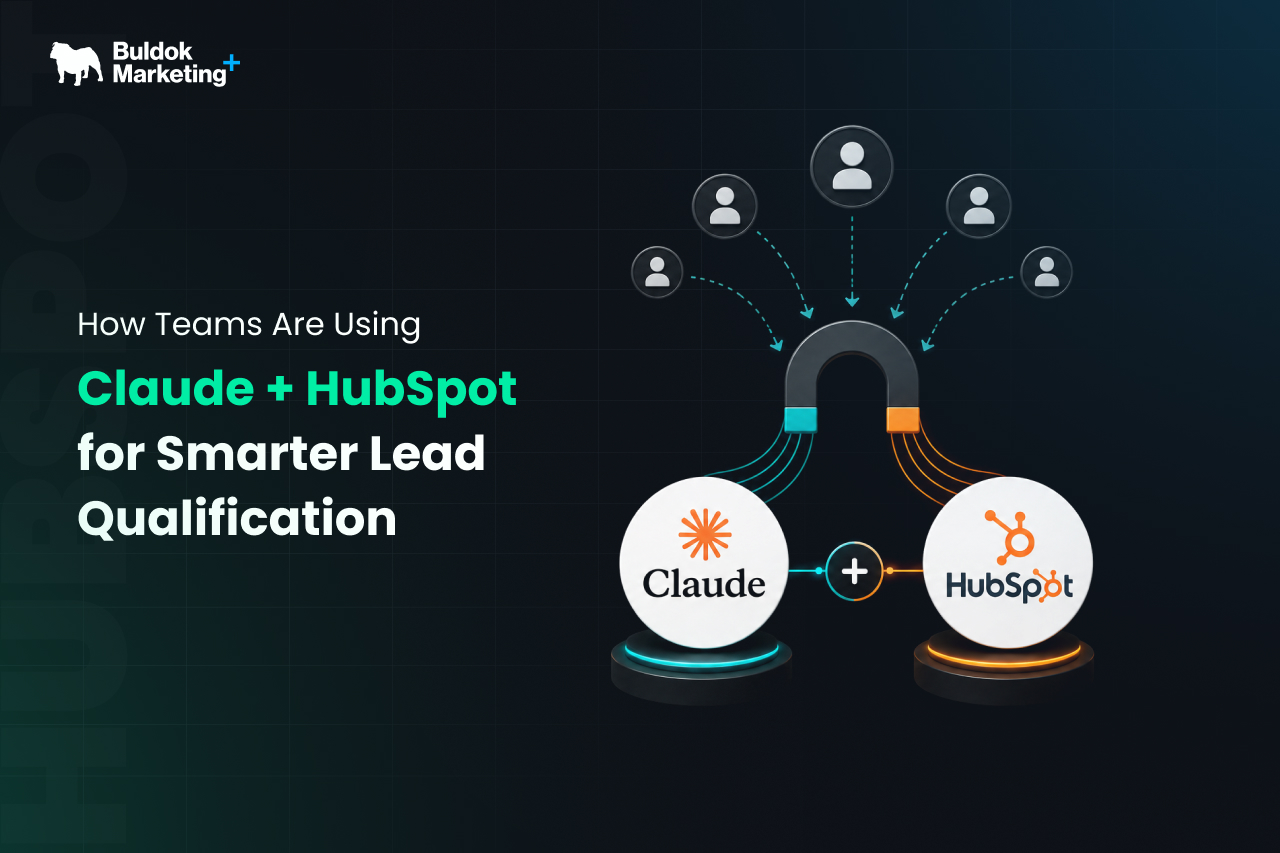
But now that’s changing. Teams are combining AI assistants like Claude with CRM platforms like HubSpot to create faster, context-aware lead qualification systems that go beyond traditional scoring rules.
Instead of simply assigning points based on form fills or email opens, businesses are using AI to interpret conversations, analyze engagement patterns, summarize CRM activity, and surface the leads that are actually ready to move forward.
For companies managing large volumes of inbound leads, this combination is becoming increasingly valuable. HubSpot provides the customer data infrastructure. Claude adds reasoning, contextual understanding, and workflow intelligence on top of that data.
Why Traditional Lead Qualification Often Breaks Down
Most lead qualification systems were designed around fixed logic:
A lead downloads an ebook - they receive five points. A contact visits the pricing page twice - they receive another ten, and a company with over 500 employees enters the CRM, they are the higher priority.
This model worked when customer journeys were simpler and sales cycles were more linear. But today, buyers interact across multiple channels, consume content anonymously, engage inconsistently, and often complete most of their research before speaking to sales.
As a result, static scoring models frequently create problems such as:
- High-intent leads are being overlooked because they did not match predefined scoring rules
- Low-quality leads appear “sales-ready” because they triggered enough automated actions
- SDR teams are wasting time reviewing incomplete CRM data
- Marketing and sales teams disagree on qualification standards
- Delayed follow-up because manual reviews slow down prioritization
The real challenge arises when companies have large volumes of behavioral data inside their CRM, but they can’t interpret it accurately. Here’s where AI tools like Claude can help.
Why Choose Claude for Lead Qualification
%20(1).jpg?width=724&height=450&name=What%20_Working_%20Actually%20Means%20(and%20Why%20It%20Is%20Not%20Enough)%20(1).jpg)
Many AI tools can summarize information or automate repetitive tasks. Claude stands out because it handles context exceptionally well. It can process large amounts of structured and unstructured CRM data while maintaining reasoning across long conversations and workflows.
When connected with HubSpot, Claude can help teams interpret lead signals in a more human way instead of relying only on numerical scoring.
For example, instead of merely identifying that a lead opened three emails, Claude can analyze:
- Which content topics did the lead engage with
- Whether engagement patterns suggest research or buying intent
- How recent activity compares to previous interactions
- Whether sales conversations indicate urgency or hesitation
- If the company profile aligns with the ideal customer criteria
This creates a much richer qualification process.
HubSpot - Claude connector and MCP integrations are already enabling businesses to analyze CRM records, segment audiences, summarize pipeline activity, and automate qualification workflows more intelligentlyThe result is not replacing sales teams. It is helping teams focus attention where it matters most.
How Teams Are Actually Using Claude + HubSpot
Here are some of the most common HubSpot + Claude approaches businesses are adopting today:
1. AI-Assisted Lead Summaries for SDR Teams
One of the simplest but most effective use cases is automated lead summarization. Before an SDR reviews a lead, Claude can generate a concise summary based on HubSpot activity data, including:
- Website interactions
- Previous email engagement
- Form submissions
- Meeting history
- CRM notes
- Company information
- Previous deal activity
Instead of spending several minutes manually reviewing records, SDRs receive a quick contextual overview before outreach begins. This improves response speed while also helping sales reps personalize conversations immediately.
2. Identifying Buying Intent Earlier
Traditional lead scoring models tend to react after obvious buying signals appear. Claude can help identify intent earlier by recognizing patterns across engagement history.
For example, a prospect who:
- Repeatedly visits the integration documentation
- Downloads technical implementation guides
- Shares multiple stakeholders on forms
- Returns to pricing pages over several weeks
may represent stronger buying intent than a lead who simply opened several promotional emails.
Because Claude evaluates the broader context, teams can identify opportunities earlier in the funnel and prioritize outreach more effectively. This becomes especially valuable for B2B companies with long buying cycles where intent signals are subtle and distributed across multiple touchpoints.
3. Smarter Lead Routing
Lead routing often becomes messy as companies scale. Different territories, industries, deal sizes, and product lines create routing complexity that rule-based workflows struggle to manage cleanly.
Teams are now using Claude inside HubSpot workflows to evaluate lead context before assigning ownership. For example, Claude can analyze:
- Company size
- Industry fit
- Engagement quality
- Product interest
- Existing customer relationships
- Geographic relevance
- Urgency indicators
The AI then supports routing recommendations that are more accurate than static assignment logic alone. This reduces handoffs, improves response quality, and prevents qualified leads from being delayed inside crowded pipelines.
Why This Combination Works So Well Inside HubSpot
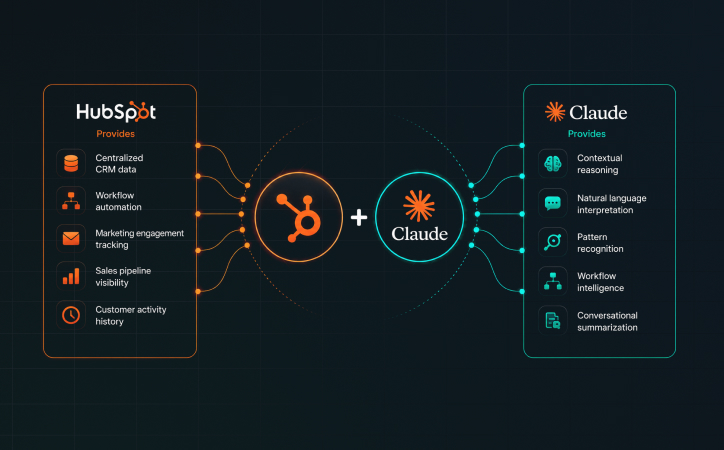
The strength of this setup comes from combining two very different capabilities.
HubSpot provides:
- Centralized CRM data
- Workflow automation
- Marketing engagement tracking
- Sales pipeline visibility
- Customer activity history
Claude provides:
- Contextual reasoning
- Natural language interpretation
- Pattern recognition
- Workflow intelligence
- Conversational summarization
Together, they create a qualification process that feels significantly more adaptivethan traditional automation systems.
Importantly, businesses do not need to rebuild their CRM infrastructure to use these workflows. Most companies already have the underlying data sitting inside HubSpot. The improvement comes from adding AI interpretation on top of that data.
This is one reason many teams are now focusing on AI augmentation rather than replacing their existing CRM stack entirely.
The Role of Human Oversight Still Matters
Despite the excitement around AI-powered qualification, the best-performing teams still maintain strong human oversight.
Claude can help surface patterns, summarize data, and prioritize leads, but final qualification decisions still benefit from human judgment.
Experienced sales reps can recognize nuances that AI may not fully understand, including:
- Political dynamics inside accounts
- Timing sensitivities
- Relationship history
- Competitive positioning
- Emotional buying signals
The goal here is reducing manual analysis so teams can spend more time building relationships and closing opportunities. This balance is important because many companies fail with AI initiatives when they attempt to automate everything too quickly.
The strongest implementations usually begin with:
- AI-assisted recommendations
- Human validation
- Gradual workflow automation
- Ongoing refinement
This approach improves adoption while keeping qualification quality high.
Common Challenges Teams Need to Solve First While Implementing AI
While the Claude + HubSpot combination is powerful, results still depend heavily on CRM quality. If HubSpot data is incomplete, outdated, or poorly structured, AI outputs become unreliable.
Before scaling AI qualification workflows, companies often need to address issues such as:
- Inconsistent CRM Data
AI systems rely on clean inputs. Missing lifecycle stages, duplicate contacts, incomplete company records, and inconsistent notes reduce qualification accuracy significantly.
- Undefined Qualification Standards
If marketing and sales teams disagree on what defines a qualified lead, AI workflows simply reinforce confusion faster. Clear qualification frameworks remain essential.
- Over-Automation
Some teams attempt to automate every part of qualification immediately. This usually creates friction instead of efficiency. The best systems focus on improving prioritization first before expanding into deeper automation layers.
- Poor Workflow Governance
As AI workflows grow, governance becomes increasingly important. Teams need clear ownership around:
Workflow updates, Prompt management, CRM permissions, AI-generated recommendations, and Data privacy standards
Without governance, AI automation can quickly become inconsistent across departments.
Building Smarter Qualification Workflows Starts With the Right Foundation
AI-powered qualification works best when the CRM foundation is already structured properly.
That means:
- Clean lifecycle management
- Consistent contact data
- Defined lead stages
- Organized workflows
- Alignment between marketing and sales
- Clear reporting visibility
Without those foundations, AI becomes difficult to scale effectively.
This is why many businesses work with HubSpot-focused specialists like Buldok Marketing before expanding AI automation across revenue operations.
We help companies with HubSpot onboarding, CRM processes, automation strategy, and revenue workflows that support scalable growth.
As AI tools like Claude continue becoming more integrated into CRM operations, businesses that already have strong operational foundations will move much faster than teams still struggling with fragmented workflows and inconsistent data.
Final Thoughts
Modern lead qualification requires context, timing, behavioral interpretation, and workflow intelligence. That is why the combination of Claude and HubSpot is attracting so much attention from sales and marketing teams.
HubSpot centralizes customer data and operational workflows, while Claude helps teams interpret that data more intelligently. Together, they help businesses prioritize leads more accurately, reduce manual CRM analysis, improve SDR efficiency, surface intent signals earlier, align marketing and sales workflows, and scale qualification processes more effectively without adding unnecessary operational complexity.
This is also where Buldok Marketing helps businesses create smarter HubSpot ecosystems that support scalable sales and marketing operations. From CRM optimization and workflow automation to AI-driven HubSpot strategies, Buldok Marketing helps teams build processes that improve lead qualification and overall revenue performance.
As AI continues to become more integrated into CRM workflows, businesses that combine strong operational foundations with practical AI implementation will be in a much stronger position to adapt, grow, and compete more effectively in the evolving digital sales landscape.