
Being a person who regularly manages a CRM, you might have already heard this phrase: Your CRM is only as powerful as the data inside it. So, keeping your CRM and its data clean should be your topmost priority.
Many B2B teams invest in HubSpot, build campaigns, and generate leads, but over time, something starts to break. Reports become unreliable. Sales teams lose trust in the system. Marketing automation misfires. Leadership questions the numbers. The problem is rarely the platform; it is the data.
This makes HubSpot CRM cleanup an essential revenue-critical initiative for every company to perform to keep their CRM operations running at their best. When done right, it restores visibility, improves conversion rates, and aligns marketing and sales around a single source of truth.
This blog outlines a practical 30-day plan to execute a complete HubSpot CRM data cleanup without disrupting ongoing operations. It is designed for RevOps teams, marketing leaders, and CRM owners who want to turn messy data into a strategic asset.
Why HubSpot CRM Data Degrades Over Time
CRM decay does not happen overnight. It builds gradually through everyday activity.
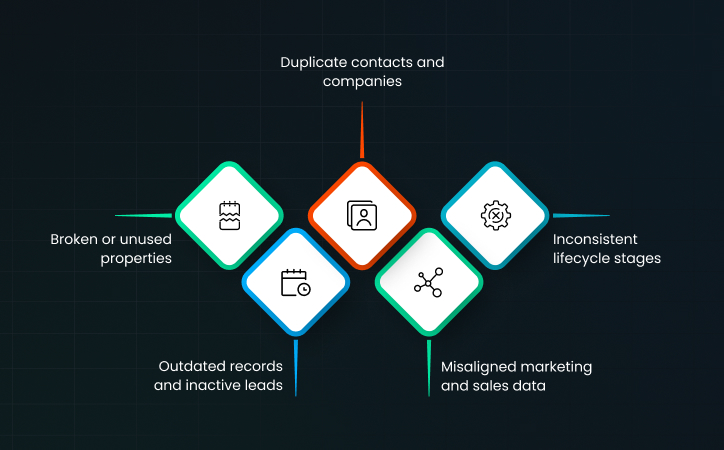
Every imported list, every form submission, every manual update adds complexity. Without governance, this leads to:
- Duplicate contacts and companies
- Inconsistent lifecycle stages
- Broken or unused properties
- Outdated records and inactive leads
- Misaligned marketing and sales data
Even teams that understand HubSpot CRM often underestimate how quickly data quality declines.
This is where most organizations struggle. They treat CRM cleanup as a one-time fix rather than an ongoing discipline.
A proper HubSpot CRM Refresh requires both structured execution and long-term governance.
The 30-Day HubSpot CRM Cleanup Plan
This plan is divided into four weeks. Each week focuses on a specific layer of your CRM:
Week 1: Audit and Baseline Your CRM Data
The first week is about understanding what you are dealing with.
Do not rush into deleting or modifying records. Start with visibility.
1. Identify Data Sources
Map where your data is coming from - forms and landing pages, integrations and third-party tools, manual imports, sales team inputs, etc. This helps you identify where inconsistencies originate.
2. Analyze Core Objects
Focus on key CRM objects like Contacts, Companies, Deals, etc. and also review record volume, completeness, and duplication patterns.
3. Audit Properties
This is where most CRM issues hide.
Look for:
- Duplicate properties with similar names
- Unused or outdated fields
- Inconsistent field types or formats
4. Define Data Quality Metrics
Set baseline metrics such as:
- Duplicate rate
- Property completion rate
- Number of inactive contacts
- Lifecycle stage accuracy
These benchmarks will help measure the success of your HubSpot CRM cleanup.
Week 2: Clean Contacts, Companies, and Duplicates
Once you understand the data, it is time to clean the core records.
1. Remove and Merge Duplicates
Duplicate records create chaos in reporting and outreach. You can use HubSpot’s duplicate management tools to merge duplicate contacts, consolidate company records, and standardize naming conventions.
2. Standardize Key Fields
Focus on critical properties such as Email, Company name, Industry, Lifecycle stage, etc. to ensure consistent formats and values are maintained across all records.
3. Fix Lifecycle Stages
Misaligned lifecycle stages distort reporting. Define clear criteria for each stage and update records accordingly.
4. Archive Irrelevant Contacts
Not all data needs to stay active. Archive the following things to keep operations sane:
- Unengaged leads
- Outdated contacts
- Test or invalid records
This step alone can dramatically improve CRM performance.
Week 3: Optimize Properties and Data Structure
With clean records in place, the next step is structuring your data correctly.
1. Remove Redundant Properties
Eliminate duplicate or unnecessary fields. Too many properties create confusion and reduce adoption.
2. Create Standard Naming Conventions
Define consistent naming rules for Properties, Lists, Workflows, etc. This ensures long-term usability.
3. Align Data with Business Goals
Your CRM structure should reflect how your business operates. Align properties with:
- Sales process stages
- Marketing segmentation needs
- Reporting requirements
4. Rebuild Lists and Segments
Many lists become outdated over time. Rebuild active lists based on clean data and current strategy, this step strengthens automation and targeting.
Week 4: Validate, Automate, and Govern
The final week ensures your cleanup effort lasts.
1. Validate Data Accuracy
Run checks to confirm:
- No duplicate records remain
- Properties are populated correctly
- Lifecycle stages align with behavior
2. Set Up Automation Rules
Prevent future data issues by implementing:
- Duplicate prevention workflows
- Property standardization rules
- Data enrichment automation
3. Establish Data Governance
Define clear ownership and processes:
- Who manages CRM data
- How imports are handled
- How properties are created or modified
4. Train Your Team
Even the best CRM structure fails without adoption.
Train marketing and sales teams on:
- Data entry standards
- Property usage
- CRM best practices
This ensures your HubSpot CRM data cleanup effort delivers long-term value.
What a Clean HubSpot CRM Actually Enables
After understanding the 30-days cleanup journey, now let’s explore the outcome. A clean CRM does not just look better; it performs better across the entire revenue engine.
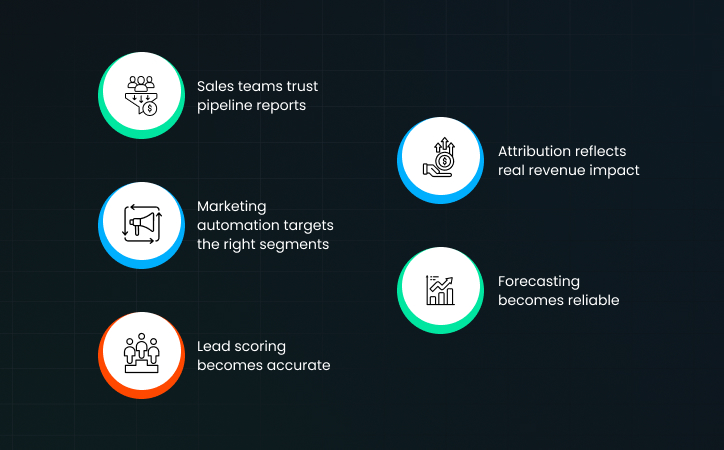
When your data is clean:
- Sales teams trust pipeline reports
- Marketing automation targets the right segments
- Lead scoring becomes accurate
- Attribution reflects real revenue impact
- Forecasting becomes reliable
If you are still exploring what is HubSpot or planning a system overhaul, understanding this foundation is critical. For teams already using the platform, this is where a structured cleanup creates immediate business value.
Common Mistakes to Avoid During HubSpot CRM Cleanup
Many teams make critical mistakes during cleanup efforts. Here are 4 critical pitfalls that teams should avoid at all cost:
- Cleaning Without a Strategy: Deleting data without understanding its role can break reporting and automation.
- Ignoring Sales Team Input: Sales teams rely on CRM data daily. Their input is essential.
- Over-Customizing Properties: Too many custom fields create complexity and reduce usability.
- Treating Cleanup as a One-Time Task: Data hygiene is ongoing. Without governance, issues will return.
How Often Should You Perform a HubSpot CRM Refresh
A full HubSpot CRM Refresh should ideally happen every 6 to 12 months. However, smaller maintenance tasks should be ongoing:
- Monthly duplicate checks
- Quarterly property audits
- Continuous data validation
This approach prevents large-scale cleanup projects in the future, saving your and your teams time and resources.
When to Consider Expert Help
While internal teams can handle basic cleanup, complex CRM environments often require expert support.
This is especially true if:
- You have multiple integrations
- Your CRM has grown without structure
- Reporting is inconsistent or unreliable
- Sales and marketing data are misaligned
Working with a HubSpot expert like Buldok Marketing who offer end-to-end HubSpot services can accelerate cleanup and ensure best practices are followed.
For teams starting fresh or restructuring their CRM, HubSpot onboarding can help build a clean foundation from day one.
Fix Your CRM Before It Slows Growth
Clean data leads to better decisions, faster sales cycles, and stronger
marketing performance.

Building a Long-Term Data Hygiene Strategy
HubSpot CRM cleanup is only the first step towards better operations and driving better revenue, but sustained success requires consistent efforts and discipline. So, here are a few steps to follow for long-term data hygiene inside your CRM:
1. Define Data Standards
Set clear rules for Required fields, Property formats, Naming conventions, etc.
2. Monitor Data Quality Regularly
Create dashboards to track duplicate rates, data completeness, and lifecycle accuracy.
3. Align Teams Around Data
Marketing, sales, and RevOps must operate with shared definitions.
4. Continuously Optimize
Your CRM should evolve with your business. Regular reviews ensure it remains aligned with goals.
The Business Impact of a Clean HubSpot CRM
A clean CRM does more than improve organization. It directly impacts how effectively your revenue engine runs.
With a structured HubSpot CRM cleanup, teams can rely on accurate and consistent data across marketing, sales, and RevOps. This alignment improves lead targeting, ensures better handoffs, and helps sales teams focus on the right opportunities instead of fixing data issues.
One of the biggest benefits is improved conversion rates. Clean and well-segmented data allows marketing to run more precise campaigns, while sales teams receive better-qualified leads. At the same time, reporting becomes more reliable, making revenue attribution and forecasting far more accurate.
A proper HubSpot CRM data cleanup also strengthens automation. Workflows depend on clean data to function correctly. When your CRM is structured and standardized, automation becomes more effective and scalable.
Ultimately, a consistent HubSpot CRM Refresh builds trust in the system. When teams trust the data, they use the CRM more confidently, which leads to better decisions and stronger business outcomes.
Conclusion
Your CRM is not just a database. It is the foundation of your revenue operations.
Ignoring data quality leads to missed opportunities, broken processes, and unreliable insights.
A structured 30-day HubSpot CRM data cleanup plan helps you regain control. It brings clarity to your data, alignment to your teams, and confidence to your reporting.
If you are still exploring HubSpot, start with the fundamentals. If you are already using it, now is the time to optimize it. Because in modern B2B growth, clean data is not optional. It is your competitive advantage.
Looking for a reliable partner to help you with HubSpot? Buldok Marketing team can help. Connect with us today for further discussion.