Personalized prospecting videos work best when they are treated as a CRM-driven sales motion, not as a creative experiment.
HubSpot gives sales and marketing teams the customer context, segmentation, lifecycle data, workflows, and reporting layer. Tavus adds AI video generation and conversational video capabilities that can turn that context into one-to-one video messages at scale.
Today, just adding a first name in a subject line no longer makes a prospect feel understood. Such personalization is essential to keep them engaged. While sales teams cannot manually record a new video for every account, stakeholder, and follow-up moment, HubSpot + Tavus framed a solution for this situation.
Let’s explore more about this combination in detail.
Why Personalized Prospecting Video Needs HubSpot CRM Context
Video alone does not make outreach effective. A prospect can ignore a generic video as easily as they ignore a generic email. The value comes from showing that the message was created for their situation, company, buying stage, and likely problem.
That level of relevance depends on data. HubSpot can hold the inputs that make a Tavus video meaningful: contact role, company size, industry, lifecycle stage, lead source, viewed pages, form submissions, etc. When those inputs are structured properly, a sales team can create videos that reference the right pain point instead of pushing every recipient into the same script.
This means if the CRM data is incomplete, outdated, or inconsistent, AI-generated outreach will reflect those weaknesses. Learn more about how to keep your HubSpot CRM clean and actionable from this 30-day cleanup plan.
What Tavus Adds to HubSpot Prospecting
Tavus is an AI video platform focused on human-like video generation and real-time conversational experiences. Its product direction includes PALs, which Tavus defines as Personified Application Layers, plus a Developer API for building interactive AI conversations that combine perception, understanding, voice, and rendering.
For prospecting, Tavus can support two practical motions:
- The first is asynchronous personalized video: A rep or company uses an approved face, then generates videos from scripts that change based on CRM data. Tavus documentation explains that its Video Generation API can turn a written script and a face into a finished video file, with status updates and hosted URLs available once the video is ready.
- The second is conversational video: Tavus uses its Conversational Video Interface as a pipeline for real-time AI agents, where a PAL’s behavior is combined with a face that defines on-screen likeness and voice. Tavus documentation lists use cases such as sales coaching, customer support, interviewing, and a sales development rep experience.
For most B2B teams, asynchronous personalized prospecting videos should come first because they are easier to control and measure.
How HubSpot + Tavus Works Together
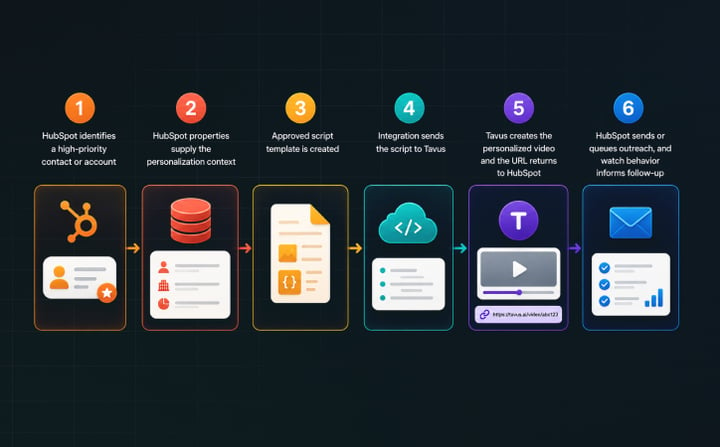
The workflow of HubSpot + Tavus starts with HubSpot throwing a trigger like: This could be a new high-fit inbound lead, a target account added to an ABM list, a contact that viewed the pricing page twice, etc.
Once the trigger is met, HubSpot collects personalization inputs such as name, company, role, industry, content topic viewed, campaign source, and primary pain point.
The workflow can then send those details into an approved script template with a short opener, one relevant observation, one business problem, one credibility point, and one CTA.
From there, an integration layer can send the script to Tavus. This might be done through a custom API workflow, middleware, or a platform that already supports Tavus generation.
The finished video URL can then be written back into HubSpot as a contact property, custom object record, or engagement note. The sales email can include a thumbnail or link to the personalized video.
If the video is watched or partly watched, that engagement can inform lead scoring, sales tasks, sequence branching, or campaign reporting.
In short, here’s how the combination will work:
- HubSpot identifies a high-priority contact or account.
- HubSpot properties supply the personalization context.
- Tavus creates the video from an approved script.
- The video URL returns to HubSpot.
- HubSpot sends or queues the outreach.
- Watch behavior informs follow-up.
Where Personalized Prospecting Videos Fit Best
HubSpot and Tavus will not be equally useful for every contact. If a company generates personalized videos for every record in the database, quality will fall, and the campaign will become expensive to manage. The stronger approach is to use Tavus where the extra effort has a clear sales reason.
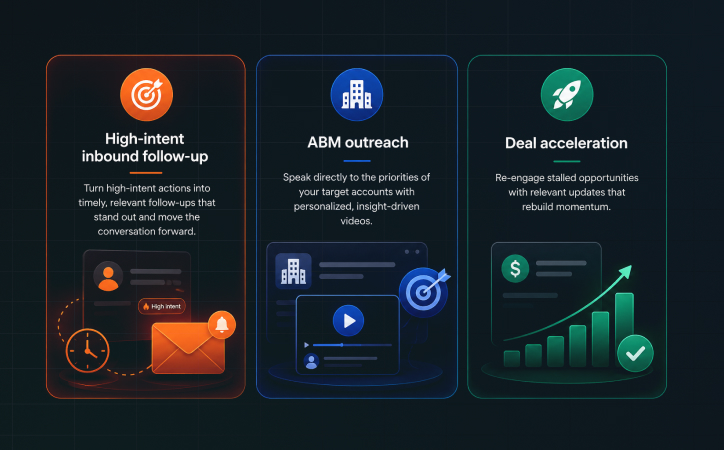
Some of the best use cases of HubSpot + Tavus include:
- High-intent inbound follow-up: When someone requests a demo, downloads a high-value asset, visits key service pages, or returns after a
- quiet period, a personalized video can make the follow-up feel timely and specific. Instead of sending a standard “thanks for your interest” email, the rep can reference the topic the person engaged with and suggest the next logical step.
- ABM outreach: For a narrow list of target accounts, a video can reference industry, revenue motion, hiring patterns, technology stack, or a likely operational challenge.
- Deal acceleration: Tavus can also support deal acceleration when an opportunity stalls after a proposal.
How to Measure HubSpot + Tavus Performance
The biggest advantage of connecting Tavus to HubSpot is that video performance can be tied to pipeline outcomes. Without CRM reporting, personalized video becomes another engagement tactic. With HubSpot reporting, it becomes part of revenue operations.
Here’s how to measure their performance:
- The first layer of measurement is campaign engagement. Teams should track video generation success, email send rate, open rate, click-through rate, video view rate, average watch percentage, CTA clicks, replies, and meetings booked.
- The second layer is sales progression. Did contacts who received a Tavus video convert from lead to meeting at a higher rate? Did opportunities receiving video follow-ups move faster through deal stages? Did the win rate improve for target accounts?
- The third layer is attribution. HubSpot should help teams understand whether video influenced the pipeline or only created surface-level activity. This is where an internal resource like How to Build a Multi-Touch Attribution Model Inside HubSpot can support the measurement conversation. A prospecting video should not receive full credit for a deal by default, but it should be visible as one touchpoint in a larger buying journey.
Guardrails for AI Prospecting Videos
AI-generated video can create trust, but it can also damage trust if it feels misleading. The goal should not be to make prospects believe a rep manually recorded every video. The goal should be to use AI responsibly to deliver relevant communication at a scale that would otherwise be impossible.
Tavus’ acceptable use policy says users must comply with laws and third-party rights, obtain required rights and consent for likeness, voice, or biometric identifiers, and clearly disclose when end users are interacting with AI-generated content or an AI-powered agent rather than a real human.
It also states that creating a customer replica requires explicit, informed consent from the individual depicted.
That means approved scripts should avoid false claims, fake urgency, fabricated relationship context, or anything that suggests a person personally recorded a message when they did not. Faces should be used only with consent and within the agreed scope. Sensitive industries may need legal review before deployment.
When HubSpot + Tavus Is a Good Fit
HubSpot and Tavus make the most sense when a company already has a defined sales motion and enough CRM discipline to personalize responsibly. It is not a shortcut for poor positioning, weak lists, or messy lifecycle stages.
The fit is strongest for B2B companies with high-value deals, target account programs, complex buying committees, or sales cycles where trust matters. It also fits teams already using HubSpot sequences, lists, workflows, lead scoring, ABM properties, and reporting. In that setup, Tavus becomes an added media layer on top of an existing revenue system.
Teams should be cautious if they lack consent processes, clear messaging, clean CRM data, or a way to measure performance. In those cases, the first step is fixing the HubSpot foundation.
Conclusion
HubSpot + Tavus is a strong example of where B2B prospecting is heading. The future is not more generic automation. It is context-aware communication that uses CRM data, AI media, workflow logic, and human judgment together.
HubSpot brings the structure: contacts, companies, lifecycle stages, workflows, sequences, reporting, and revenue visibility. Tavus brings the video layer: personalized AI-generated messages and the potential for interactive, human-like conversations.
The companies that benefit most will be the ones that treat this as a system, not a novelty. They will prepare CRM data, define responsible use policies, test focused segments, measure pipeline impact, and improve the workflow over time.
If your team wants to build that kind of HubSpot-powered prospecting engine with the right CRM structure behind it, Buldok Marketing can help turn personalized video into a practical revenue workflow rather than another disconnected AI experiment. Connect with our team today!