On 1 October 2026, HubSpot changed its pricing model for new customers in EMEA. Separate Hub subscriptions are gone, and so is the separate charge for marketing contacts. New customers now buy HubSpot differently and pay for different things.
What changes with HubSpot seats and credits
Until now, HubSpot was bought Hub by Hub, for marketing, sales and customer service, each with a base fee plus a price per user. In Marketing Hub, the number of marketing contacts also drove the price.
For new customers in EMEA, the new model applies from that date, as HubSpot's official account announced on Reddit. Hubs are no longer sold as separate products, and their base fees are gone. Marketing contacts are no longer charged separately either. Instead, you pay for things like the number of marketing emails you send from HubSpot each month.
Customers now pay for seats, in the Starter, Professional or Enterprise edition, and get credits for selected tools, covered below. Mixing editions within one subscription isn't possible. HubSpot's Free edition also remains, for up to two users.
Existing customers aren't affected for now: HubSpot isn't moving them to the new model.
User seats: View-only, GTM and Ops
You pay mainly for users. Everyone who works in HubSpot has their own seat, and the seat decides what they can access. There are three types:
- View-only (free): a user who can view but not edit.
- GTM Seat: a regular user with editing access to the whole platform, meaning the marketing, sales and customer service tools.
- Ops Seat: a user who builds automation, tracks reports and manages users. It's available only in Professional and Enterprise, where, according to HubSpot's pricing supplement as of 6 October 2026, it costs considerably less than a GTM Seat.
Each seat comes with the edition you buy, and with it the tools available in that edition.
HubSpot credits: paying for what you use
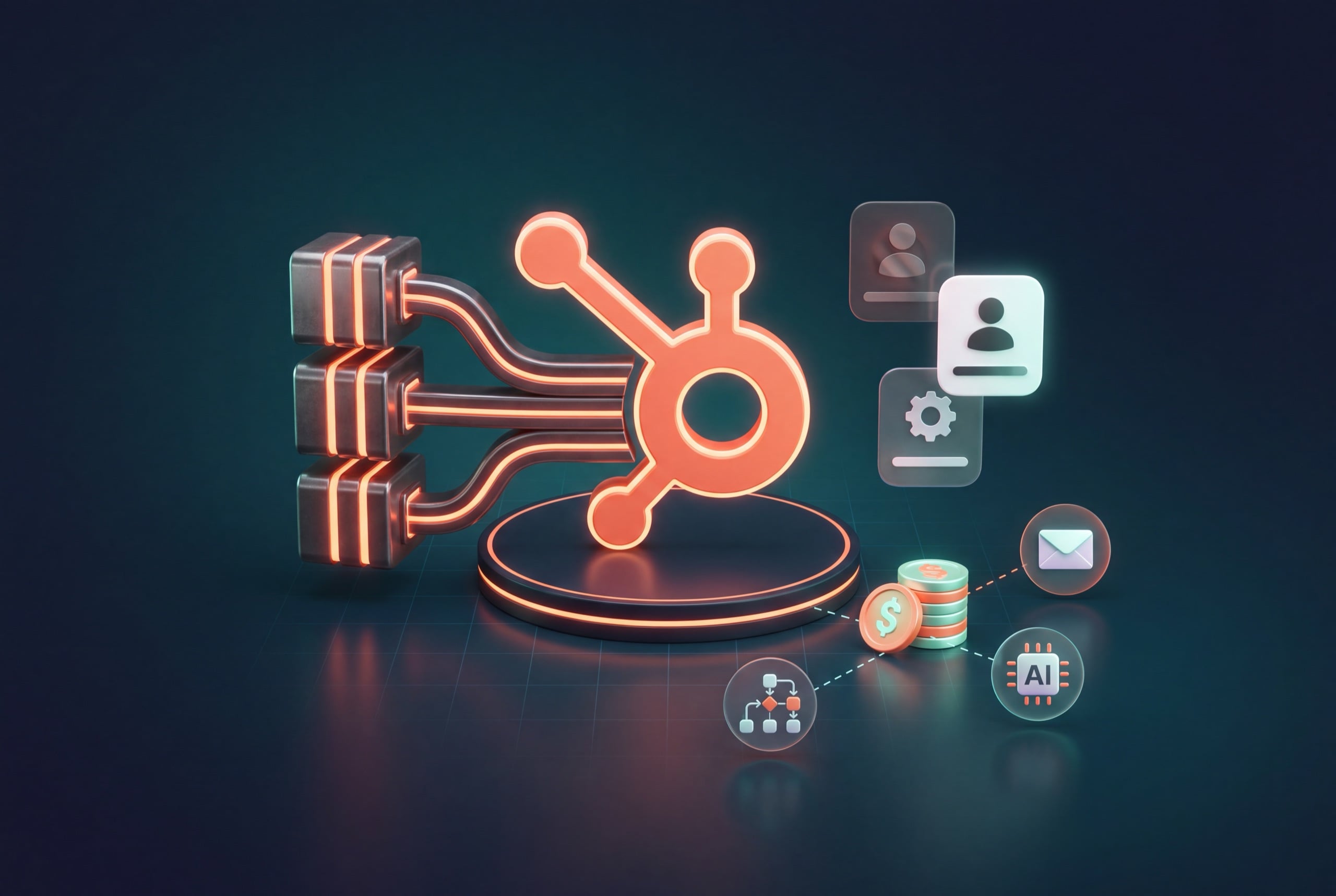
The second big change is about tools. For selected ones, you now pay according to how much you use them, through credits. Credits are used by, among other things:
- marketing and transactional emails,
- workflow actions,
- WhatsApp messages,
- AI agents.
Emails sent one to one from a connected or hosted inbox don't use credits. Every paid edition includes a credit allowance that resets each month. Unused credits don't roll over.
How many credits a business uses depends mainly on its email and automation volumes, and on whether it uses AI agents.
What it means for companies on HubSpot
The good news is that in the new model, the Professional edition includes features that used to require Enterprise. According to HubSpot's pricing supplement as of 6 October 2026, these include custom objects, customer journey analytics, revenue attribution and conditional SLAs.
One GTM Seat also gives access to marketing, sales and customer service at once, so a business no longer needs three separate Hubs. That makes HubSpot more accessible for company-wide use, and the price grows with the team. Smaller businesses can benefit too.
Part of the cost does move to usage, though. If you send a lot of marketing email or use AI agents, work out your credit usage in advance.
What to do now
If you're in EMEA and only now considering HubSpot, you'll buy it under the new model. Before you decide, go through three things:
- How many people will work in HubSpot, and which of them need GTM, Ops or just View-only access.
- How many marketing emails you send each month and how many automations you plan.
- Which edition you need for its features, not for your number of contacts.
We keep current prices and their changes in one place, on our HubSpot pricing page. If you're considering a HubSpot implementation, we're happy to go through the new pricing with you and work out what HubSpot will really cost you under the new model.